


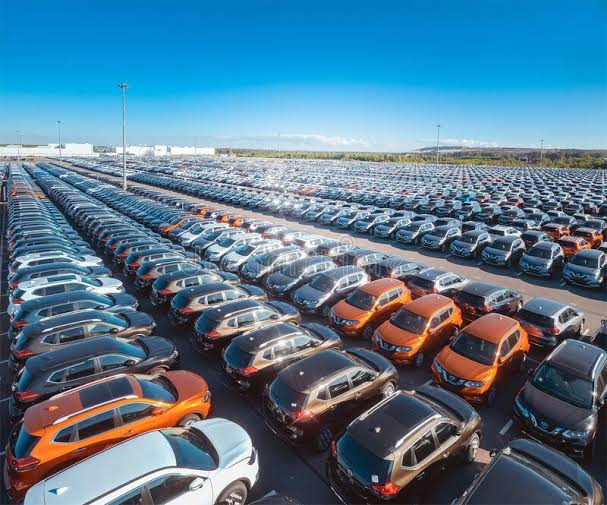
South Sudan Vehicle Imports from China remained relatively limited in 2025, highlighting the country's continued reliance on established regional and Asian automotive supply routes. United Nations COMTRADE data shows that South Sudan imported US$44.25 thousand worth of motor cars and vehicles designed to transport people from China during 2025.
The figure covers passenger vehicles broadly rather than a particular manufacturer or model. It therefore provides a useful indication of the scale of China's passenger-vehicle trade with South Sudan, but should not be interpreted as the value of a single brand's sales.
Regional Suppliers Remain Important
The wider South Sudan Vehicle Imports market is considerably larger than the China passenger-car figure suggests. World Bank WITS data shows that South Sudan imported about US$66.56 million worth of vehicles, parts and accessories under HS Chapter 87 during 2025. Uganda accounted for approximately US$31.72 million, while Japan supplied about US$31.30 million.
This distribution demonstrates the importance of neighboring countries and established Japanese vehicle supply chains. Japan alone exported approximately US$21.5 million of vehicles and related products to South Sudan in 2025, according to the same trade dataset.
Uganda Has a Major Role
Uganda's position is particularly significant for South Sudan Vehicle Imports because of its geographical proximity and established commercial connections. Passenger-car imports from Uganda reached approximately US$12.17 million in 2025, far exceeding the corresponding China figure.
Regional sourcing can be especially important in a market where transportation costs, logistics, and access to spare parts influence the overall cost of vehicle ownership.
Chinese Vehicles Still Have Potential
Although China's passenger-vehicle trade with South Sudan was relatively small in the reported 2025 figures, individual shipments demonstrate that Chinese manufacturers are already reaching the market. Shipment records include a Wuling passenger car shipped from China to South Sudan in June 2025.
China's rapidly expanding global vehicle exports could create additional opportunities for manufacturers to increase their presence in African markets. Chinese passenger-car exports reached more than 6.2 million units during the first eight months of 2026, showing the scale of the country's growing international automotive industry.
What the Market Data Means
The South Sudan Vehicle Imports figures show a market where supply remains diversified but heavily influenced by regional and Japanese sources. China's current passenger-vehicle value is comparatively modest, yet the presence of Chinese brands and growing global exports could gradually change the competitive landscape.
For buyers, the availability of affordable vehicles is only one consideration. Durability, fuel consumption, spare-parts availability, and after-sales support can be equally important when choosing a vehicle for South Sudan's operating conditions.
For more automotive developments across African markets, visit AfriCarGroup.
Conclusion
The South Sudan Vehicle Imports market currently shows a clear preference for established supply channels, with Uganda and Japan accounting for much larger vehicle trade values than China. However, China's expanding automotive industry means its role could grow over time.
Could Chinese vehicle brands become a bigger force in South Sudan, or will Japanese and regional suppliers remain dominant? Share your thoughts in the comments.